

More of a listener than a reader? Listen to a podcast-style Audio Overview created with NotebookLM
What Are AI Agents and Why Are They Everywhere All of a Sudden?
It feels like the term AI agent has appeared out of nowhere. Suddenly, we’re hearing about them from major tech companies, in business talks, and all over the news. But what does this term actually mean?
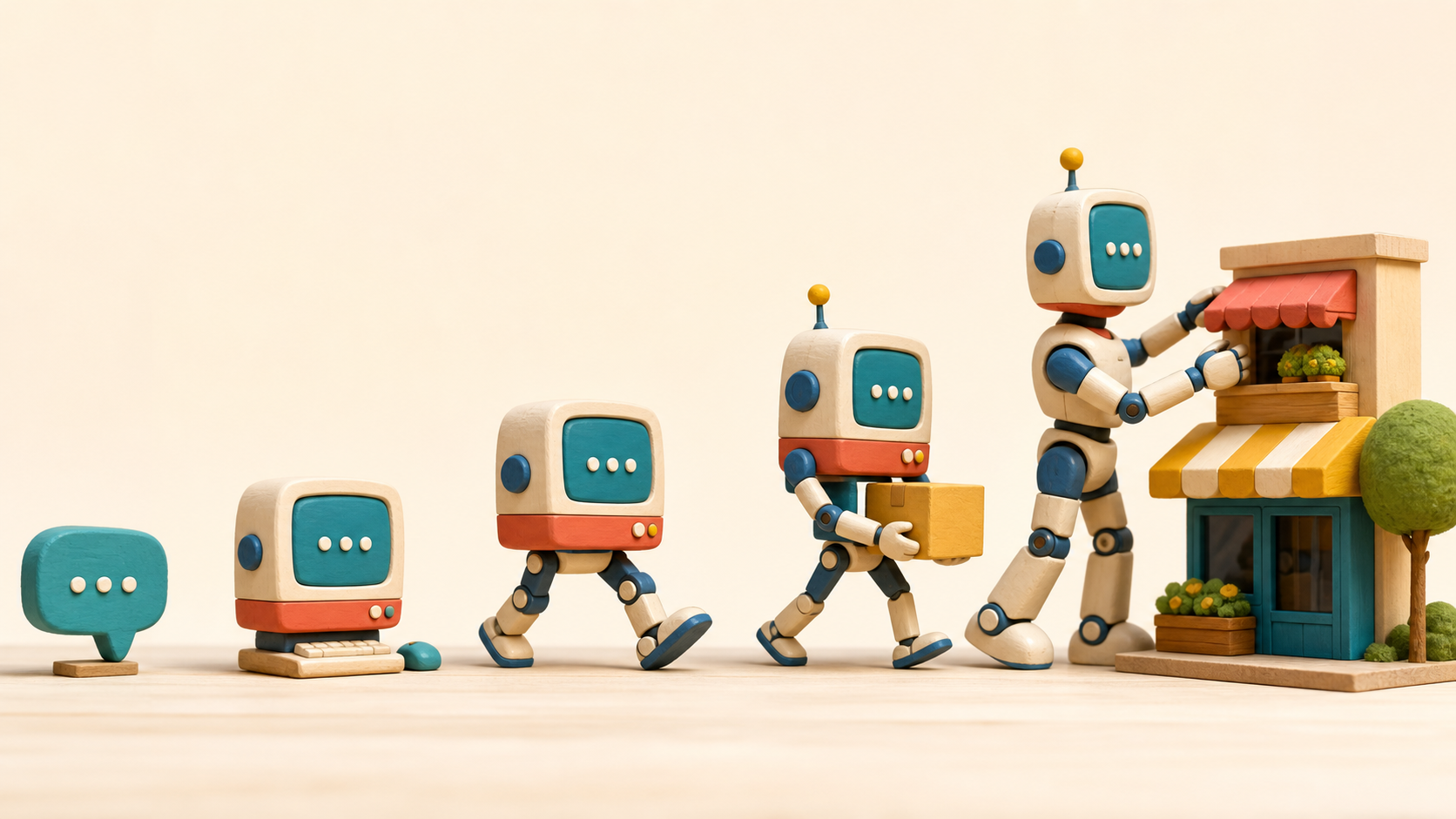
You’ve probably used tools like ChatGPT, Perplexity, or Siri, which respond to commands, but AI agents are what many consider to be the next evolution of AI. Simply put, AI agents are advanced programs that can carry out tasks autonomously. Unlike traditional assistants that rely on direct instructions, AI agents are designed to understand goals and act on their own to achieve them. They can analyze information, make decisions, and adapt based on the data they receive, allowing them to handle tasks without needing constant supervision.
September has been LOADED with updates regarding AI agents from the biggest companies in tech. Here’s a quick overview.
Recent AI Agent Updates from Major Players
- On September 16th, Microsoft announced Copilot Wave 2, which expands their AI capabilities by introducing agents designed to automate tasks across familiar tools like Excel, Word, and Teams. These agents can manage everything from organizing meetings to analyzing data with minimal input from users. One standout feature is Copilot Pages, where multiple people can collaborate with an AI on the same canvas, enhancing teamwork and productivity.
- On September 12th, Salesforce introduced Agentforce, a suite of autonomous AI agents designed to streamline tasks across sales, service, marketing, and commerce. These agents are built to operate independently, analyzing data, making decisions, and taking actions like answering customer queries or optimizing marketing campaigns. With customizable, low-code tools, businesses can quickly deploy AI agents to scale operations, driving efficiency and improving customer satisfaction.
Salesforce also announced an expanded partnership with Google and NVIDIA to make their Agentforce agents even more powerful.
- OpenAI’s latest “o1” model released on September 12th has significant implications for the future of AI agents. This model enhances an agent’s ability to handle more complex tasks, thanks to its improved reasoning and decision-making capabilities.
- Earlier this summer, Meta launched AI Studio, which lets creators and small businesses build AI-powered assistants and avatars. These agents are designed to engage with users in more human-like ways on platforms like Facebook and Instagram.
- Even Apple has entered the AI agent conversation with their latest iOS updates that introduce Apple Intelligence, which integrates AI across the Apple ecosystem, focusing on personalized automation and on-device processing.
What Makes AI Agents Different and Why Are They Significant?
The main difference between a “traditional” AI program or tool like ChatGPT and an AI agent is their level of autonomy and scope of actions.
Traditional AI Tool: You give it a prompt, it generates a response, and that’s it. Each interaction requires input from you.
- Example: “What’s the weather like tomorrow?” → ChatGPT tells you the weather.
- Example: “Summarize this document.” → ChatGPT provides the summary.
AI Agent: It can perform tasks on its own based on a broader goal. It can gather information, make decisions, and take multiple steps without requiring constant prompts.
- Example: “Plan my day tomorrow.” → The AI agent checks the weather, reviews your calendar, suggests the best time for meetings, sets reminders, and prepares emails—without further input.
- Example: “Help me manage my inbox.” → The AI agent prioritizes important emails, drafts responses, and categorizes messages for you automatically.
One of the most significant aspects of AI agents is their ability to be cross-channel. They can seamlessly operate across different platforms and tools—whether it’s responding to emails, managing tasks in your calendar, or analyzing data—without needing to be limited to one specific app. This flexibility allows AI agents to be integrated across various workflows, making them invaluable in both personal and professional settings.
As AI agents continue to grow smarter, they’re likely to become a part of our everyday lives in ways we haven’t yet fully imagined. From handling routine tasks to making complex decisions, these agents will be more than just tools—they have the potential to be partners in our work and even personal lives. Whether it’s simplifying our schedules or running entire business processes, AI agents are set to usher us into the next phase of the AI-era.
Author’s Note: I use AI in my writing to help with formatting, readability, and fact-checking. I do my best to double check every source and fact, but just like how AI can make mistakes, so can humans. If I missed anything or if something is incorrect (especially with the Audio Overview), please let me know by emailing me at jmeredithmkt@gmail.com or connect with me on LinkedIn here.
Sources Used for this Article and the Audio Overview



Leave a Reply