

Stuck in a chat box prison
If you’ve used a tool like ChatGPT, Grok, Claude or any other Large Language Model (LLM), you’ve probably had the feeling of, “Man, I wish it could just do this for me instead of me having to copy and paste everything all the time.” Even though it’s a super helpful tool, AI can still be a bit of a pain.
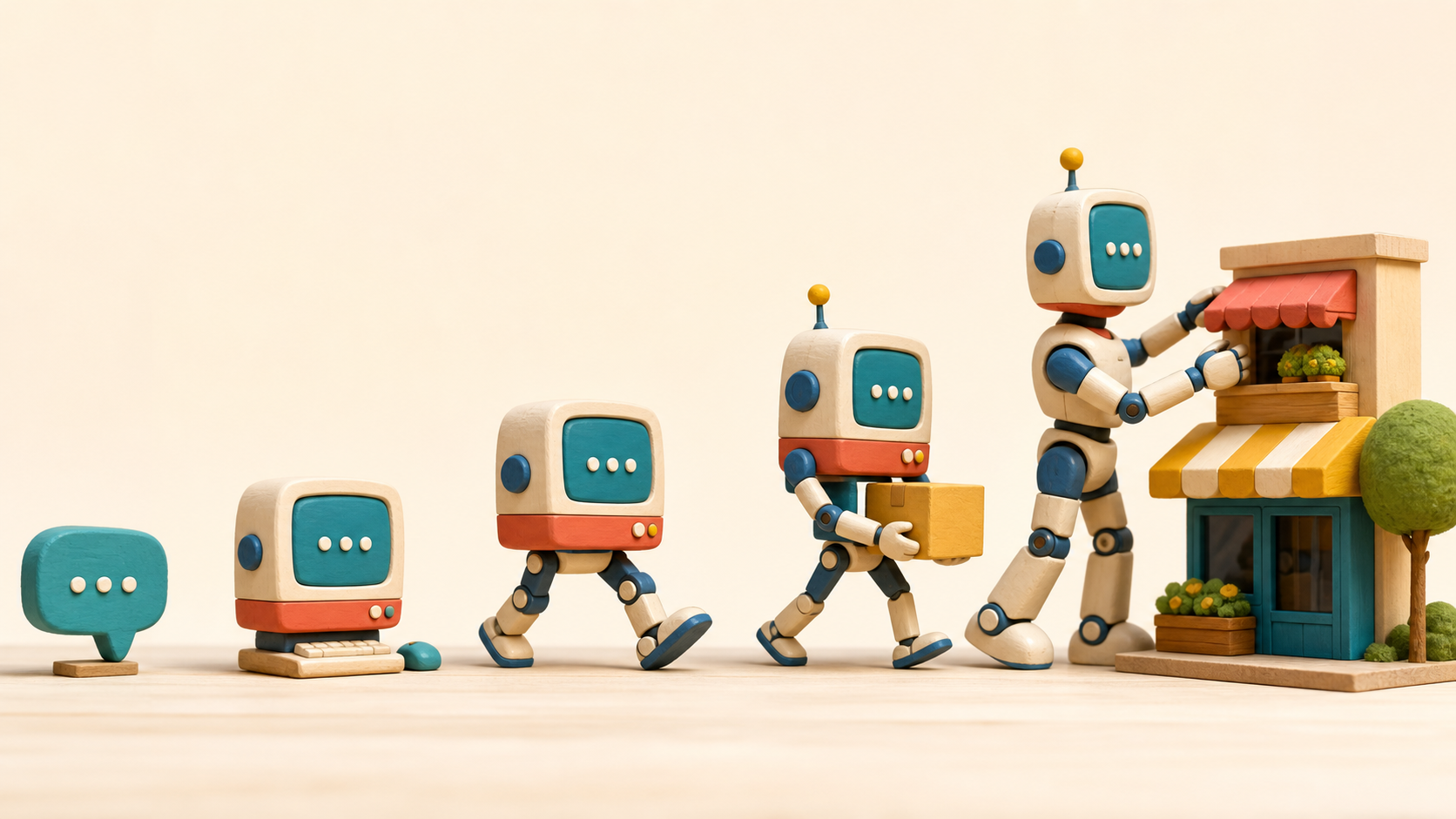
But that might not be the case anymore. A technology called Model Context Protocol, or MCP, promises to break AI out of its chat box prison.
Think about a USB-C cable. You can use it to charge your phone, plug into your laptop, or transfer files between devices. It works across brands and devices—simple, universal, and reliable.
MCP is like that, but for AI. Instead of connecting hardware, it connects AI systems to the everyday apps and tools you already use—like calendars, CRMs, email platforms, and more. It’s a single standard that helps AI talk to everything else without needing custom setups for each connection.

What did we do before?
Before MCP, AI tools were pretty limited when it came to doing real tasks. For most of us, our interactions with AI are usually kept within the confines of the ChatGPT/Claude window. It can help you write an email, but you’d still have to copy and paste it into the text box of your email provider.
It wasn’t impossible to connect AI to outside sources and systems, though. Through an API, there are countless tools that can pull data from your CRM, schedule something on your calendar, or check your inventory. But every one of those connections had to be custom-built. This is like in the early days when every phone and laptop had its own funky-looking charging port.
And for AI tools, it’s messy, expensive, and can often break when updated or changed.
Some platforms (like ChatGPT) tried to solve this with plugins. But even then, each plugin worked differently, only inside that specific platform, and didn’t play nicely with others. There was no standard way for AI to talk to the rest of your tools. It needed a USB-C cable.
What changed?
MCP was created by Anthropic, the AI company behind the Claude assistant. It was first announced and open-sourced by the research lab in late November 2024 and was quickly adopted by many of the major industry players. And while Anthropic spearheaded MCP’s development (and continues to nurture the open-source project), they don’t really “own” MCP. The protocol’s rapid adoption is making it a cross-industry standard rather than an Anthropic-only tool.
How does it work?

When an app or service wants to work with AI, they will build a sort of “menu.” MCP is the format that makes sure all those menus are written in the same language. This means that any AI that can read MCP will be able to understand the menu.
The menu is a list of things the app is willing to do for the AI. It also tells the AI how to request each action it wants from the app—like, “Can you provide me with the contact info on these leads?” or “Can you create this event in my user’s calendar?”
This means your AI can plug into any app that has that MCP menu, look at what’s available, follow the instructions, and get the job done.
Taking it a step further, MCP allows the AI to complete multiple steps at a time and keep the same context in mind across each step—even when it’s switching between tools. That means it can follow through on multi-step tasks more smoothly, like a real assistant handling a whole process from start to finish.
It’s all done securely, with built-in rules that control what the AI is allowed to do, so businesses can use it without worrying about giving away full access to their systems.
Here’s a great video breaking down how MCP works in more detail:
The possibilities are endless
You can probably now start to see the possibilities this opens up.
You’ll be able to tell the AI to look up the best Italian restaurants in your area, check their availability for Friday night, and book a table for four at the best-rated one. With MCP, the AI could connect to review sites, reservation platforms, and even your calendar to make that happen automatically.
Maybe you run a small landscaping business. A big storm rolls through overnight, and you want to proactively offer help to the customers who might have been affected. Instead of manually looking up weather reports, customer addresses, and crafting messages one-by-one, you tell your AI assistant: “Find the areas hit hardest by last night’s storm, then message customers in those areas with a discount offer on emergency tree removal services.”
The AI would start by scanning a weather service to pinpoint storm-affected zones. It would then cross-check those zones with your customer database to find matching addresses. Next, it would write a personalized email tailored to the situation and queue it up in your email platform ready to send.
All of this happens in one automated workflow, across multiple apps, without you having to touch a spreadsheet or open five different tabs.
This is the power MCP brings to AI agents.
What does this mean for us?
As these capabilities continue to evolve, it’s becoming increasingly clear that it we’re approaching a future where an AI can do anything that a human can on a computer.
Not just answer questions. Not just write content or summarize emails. But actually open up apps, analyze information, take actions, and follow through… just like a person would.
This idea feels both exciting and a little unsettling. If AI can do everything we do on a computer, where does that leave us?



Leave a Reply